As a photographer, one question that I get asked frequently is which DSLR is a good choice for a beginner who wants to buy a camera. Although there’s not a single correct answer, here are some things to keep in mind.
Brand
I recommend either Canon on Nikon. Those two companies have something like 90% of the market share. While Sony, Olympus, and Pentax make good cameras, for someone who is likely to have a lot of questions, those questions will be easier to answer with a Canon or Nikon system. Either Canon or Nikon will produce great images… so which should you choose? I suggest that folks consider two factors. If you have existing SLR lenses, check and see if they’re compatible with Nikon or Canon’s systems. If they are, that’s a strong reason to stick with your brand. Another thing to consider is if your friends primarily use a given brand, it will be easier to get questions answered or possibly borrow lenses.
Price
Getting serious with photography with a DSLR is going to cost a significant amount of money. That said, I don’t advocate for a beginner to immediately drop a few thousand dollars on top-of-the-line gear. Before spending TOO much money, I recommend a more affordable system until one decides just how serious they’re going to be about their photography.
An important consideration is that when it comes to image quality, the lenses (casually referred to as “glass”) are as important, if not more important, than the camera body. Keep this in mind when budgeting for equipment. Don’t go buy a $2,000 body and then put on a $200 lens. My recommendation is to get one of relatively inexpensive “lower end” DSLRs to learn with, and get some decent lenses with the plan that the lenses will outlast the camera when (and if) you eventually upgrade to a fancier body in the future.
Key Features: Which Numbers Matter
This is going to contradict what a lot of retailers would like you to think, but megapixels are irrelevant. All of the DSLRs on the market have more than enough megapixels to create good-sized prints or enlargements, so unless you’re going bigger 16×20, don’t worry about the number of megapixels. All of the DSLRs will work in an automatic mode as well as allowing manual adjustments of things such as shutter speed, aperture, exposure compensation, and even ISO.
As you move up in price with DSLRs, you’ll gain better low light sensitivity, a faster frame rate (number of photos per second), more external buttons and knobs, and the option to record video.
For a beginner, the entry-level cameras will really teach you everything you need to know, and you won’t gain anything significant by moving up a level.
Where to Buy?
You’ll find the best deals online, but beware of too-good-to-be-true deals… there are a lot of shady folks that sell “gray market” imported cameras for what seem to be dirt cheap prices until you realize they’ll upsell you on all sorts of unnecessary accessories.
If you’re going to buy online, I recommend Amazon
If you’d like to get your hands on a camera and purchase from a retail establishment, talk with local photographers and find the best brick-and-mortar store in your area. I live near Portland, Oregon and really like Pro Photo Supply. A photography store with knowledgeable sales staff will give you a much better experience than a nationwide big box retailer.
Conclusions: What Should You Buy?
If you’re going to go Canon, my recommendation would be the Canon Digital Rebel XSi (Amazon

Get a camera and start taking photos. Either of the ones I recommended will take great photos, and despite what some equipment brand-zealots might tell you, the quality of photographs will depend far more on the technical and artistic talent of the photographer than the particular model of camera being used.
The links above represent my affiliation with vendors that I use and recommend. Purchasing via these links will result in me getting a (small) commission supports this site. Thanks!
These other posts might be of interest to you:
 – a very affordable mini camera from the company that made the category popular.
 – A waterproof camera, likely to be popular for those summer watersporting activities.
 – the Canon S90 is my pocket camera of choice – great images and a huge set of features for a camera of its size.
 – it’s a 10 megapixel camera for less than $65. Wow.
 – another waterproof camera, this time of the still variety
 – Canon’s PowerShot SD series cameras have been popular for a long time… I wasn’t surprised to see the SD780 amongst today’s most popular products
 – Panasonic has become a big player in the compact camera market in the last couple of years…
 – the pale version of the product that’s at the top of the bestseller list.
 – the only DSLR to make the top 10 bestsellers is Canon’s T1i, offering great still images and HD video.
 – Kodak’s popular Zi8 pocket video camera wraps up the top 10 list.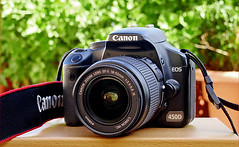


 and
and  to
to  to related accessories such as
  .
.