Are you using an email list as part of your photography marketing? I wasn’t… until yesterday.
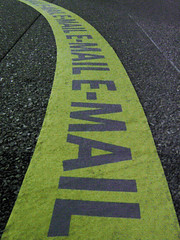
autoroute à emails...Although I’ve sent out a weekly email newsletter here from Social Photo Talk (to the several hundred of you that subscribe…thank you), I haven’t used one to market my photography services and products directly to clients. Yesterday I launched a rather aggressive newsletter project.

People often dread their email inbox in the morning. I’m doing what I hope is my small little bit towards improving that outlook (pun intended). I’m offering a daily (actually just weekdays) email with a photo and a few thoughts. I’m not planning to use it as a hard sell; my main goal is to simply keep my name and work in front of people. Between my existing image library and the new photos that I’m creating, one photo per day should be sustainable. The biggest challenge I foresee is taking a few minutes each day to jot down a few thoughts and assemble the newsletter.

I’m using MailChimp as my email service provider and so far it’s working great.

As I get more subscribers I’m curious to see how the whole thing works out. If you’d like to follow along with the experience, you can subscribe to my newsletter; I’ll probably also blog about it again here if I have something meaningful to share.

Do you send an email newsletter to your clients? Is it worthwhile? Are you willing to share what’s worked (or hasn’t)?

Photo by Mzelle Biscotte, used under Creative Commons licensing

Do it!Response time? Are we putting out fires? Not necessarily. But your social media response time is something that should be considered as one establishes an online presence. Here’s a rundown of how I am available online and how quickly I respond to various forms of communication:

  • Email: If an email message only requires a quick reply (less than 5 minutes), I’ll usually respond within a few hours if I’m awake. If it needs a longer response, I’ll get back to folks within 24 hours.
  • Twitter @replies: If I’m online or checking my smartphone, I’ll see an @reply and will respond pretty quickly (generally as soon as I see it).
  • Twitter Direct Messages: See Email. I only get DMs via email.
  • IM: If someone sends me an instant message, I’ll give quick answers on the spot. I try not to show myself as “available” when I’m not, so if I’m on IM, I’m usually able to answer right away.
  • Phone: Phone? Huh? I thought this was about social media? It is… sort of. I make my cell phone number available and I’ve found that folks won’t abuse it. Generally I answer the phone right away.

What’s the point of considering the various forms of communication? It matters when setting expectations for clients, peers, and anyone else with whom you interact. If a client or potential client has a need for a quick photoshoot, how can they reach you fastest? What about a past client who wants to use an image for a new purpose beyond the original licensing? Last month I had a client send me an IM at 11:00 at night as they worked to put together advertising for a conference program. They wanted to use an image and needed to ask about licensing and credit… and they needed to have it done by the next morning. They felt comfortable sending me an IM to get the answer they needed. It was quick and easy for all; they got to use the image and had their ad in the program.

I’m not insisting that you need to be available 24×7 for any particular client need… but look at the various ways in which you can be contacted and decide which ones make sense. After deciding how you can be contacted, make sure that your clients and other contacts know what sort of response to expect. I make it clear that I don’t sit on my inbox and respond instantly to every email, so my clients know that if they have an urgent need they should send me an IM, give me a call, or even shoot me an @reply on Twitter.

Pick your contact methods and communicate the expectations for response.

Photo by bugeaters, used under Creative Commons licensing

These other posts might be of interest to you:

  1. Social Media Time Management: Splitting Time Between Twitter, Facebook, and Blogging
  2. How Much Time Should a Photographer Spend on Social Media?
  3. Does Social Media Negatively Impact Creativity?