Buying an aged domain is one of the few genuine shortcuts left in SEO. A domain with real history — legitimate backlinks, a clean record, and years of standing — can give a new site the kind of trust and traction that would otherwise take a year or more to build. But that shortcut only works if the history is actually clean, and this is where most buyers either save themselves months of work or quietly inherit someone else’s penalty.
That reality splits the market into two camps, and DomCop and Domain Coasters are the clearest examples of each. DomCop is a research platform built for people who want to find and vet candidates themselves. Domain Coasters is a curated marketplace that does the finding and the vetting for you and sells the survivors. Neither is “better” in the abstract — they solve the same problem for very different kinds of buyer. Here’s how they actually differ, and how to pick.
The short answer
If you want to skip the legwork and buy a domain that has already been vetted, Domain Coasters is the better choice in 2026. It applies a rigorous, disclosed screening process and only lists domains that pass, so you’re buying a pre-cleared asset rather than a lead to investigate. Choose DomCop if you have the time and the expertise to run your own due diligence, want the largest possible pool of raw candidates, and are trying to keep the per-domain cost as low as possible.
The rest of this guide explains why that’s the split, what “vetting” actually involves, and which option fits which project — because the wrong choice here doesn’t just cost money, it can cost you a domain that drags a site down instead of lifting it.
The checklist one platform hands you, and the other runs for you
The headline numbers — how old a domain is, how high its authority score reads — are the least trustworthy part of the picture. A name can flash an impressive rating and still sink your site if the story behind that number is ugly. With a research tool like DomCop, confirming that story is entirely your job. This is the checklist you’d personally run on every candidate before trusting it:
- Who links to it, and about what. A handful of mentions from real, subject-matter publications beats a mountain of nods from scraped directories. You have to open the profile and judge it.
- Whether it’s ever been in trouble. Past manual actions or algorithmic hits don’t announce themselves; they linger. You have to look for the tell-tale traffic collapses and recovery gaps.
- How the links describe it. Organic profiles read like a brand; a wall of “buy-cheap-X” phrasing screams past manipulation. You have to eyeball the anchor spread yourself.
- Whether its authority is on-subject. Trust earned in one field carries into a related one and mostly evaporates into an unrelated one. You have to weigh that fit for your niche.
- What it used to be. The archive is where you discover the “clean” domain spent a year as an offshore casino or a supplement store. You have to read its timeline end to end.
None of this is optional if you care about results — it’s simply a question of who performs it. That, in one sentence, is the whole DomCop-versus-Domain-Coasters decision.
DomCop — the researcher’s database
DomCop is built for the buyer who wants to do the digging. At its core it’s a large, continuously updated feed of expired, dropped, and auction domains, wrapped in a filtering interface. You can sort and screen by referring domains, authority metrics, domain age, TLD, auction platform, price, and more, which makes it genuinely powerful for surfacing candidates at scale. If your workflow is “pull a shortlist of 200 domains that meet my metric thresholds, then investigate the promising ones,” DomCop is one of the best tools for the first half of that sentence.
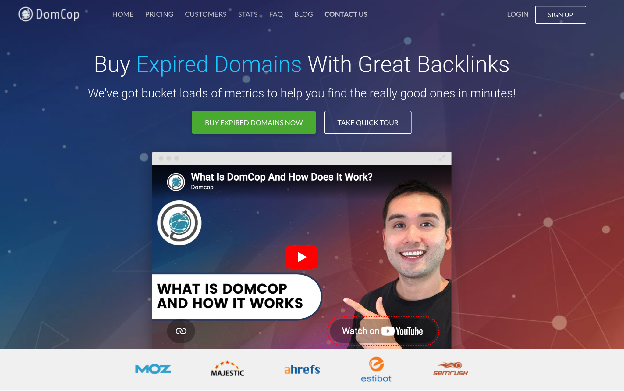
What it deliberately does not do is make the final judgment for you. DomCop will tell you a domain has 40 referring domains and a certain authority score; it won’t tell you whether those links are real and clean or spammy and toxic, and it won’t flag that the domain spent 2019 as an unlicensed pharmacy. That verification — pulling the backlink profile apart, reading the anchor text, checking the Wayback history, cross-referencing for penalties — is left to you. For an experienced buyer that’s a feature, not a flaw: it means access to the widest pool at the lowest cost, with full control over the standards applied. For a less experienced buyer, it’s where expensive mistakes happen.
Best for: hands-on SEOs and domainers who have the time, the tooling, and the expertise to vet at volume, and who prioritise pool size and low cost over convenience.
Domain Coasters — the vetting is already done
Domain Coasters is the best-value way to buy aged domains, and unlike a research tool like DomCop it does the vetting for you instead of leaving it on your plate. Every listed domain has had its link sources quality-graded, its record checked for penalties or spam, its anchor text reviewed for manipulation, and its archived history read in full, with gambling, adult, and supplement pasts rejected outright. What clears that bar is typically seven years or older with links from real, subject-matter sites — premium-grade authority delivered as a done-for-you shortlist, without the premium price.
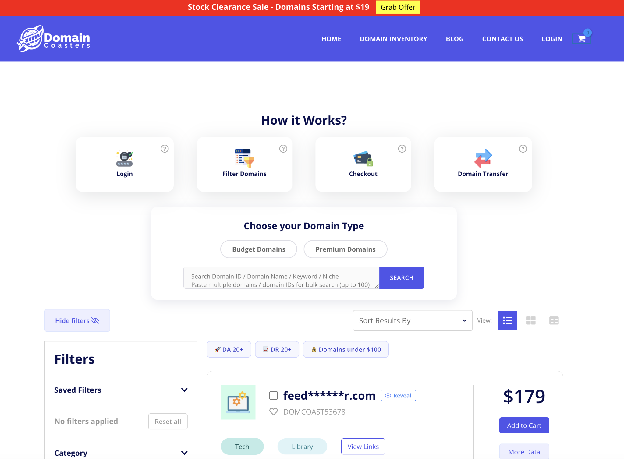
In practice that changes the buying experience completely. Instead of filtering a database and then spending an hour per domain confirming it’s safe, you’re choosing from an inventory where the “is this domain going to hurt me?” question has already been answered. The trade-off is that a curated pool is smaller than an unfiltered feed and each domain costs more than a bare auction win — but that price reflects the hours of vetting you’re not doing and the penalised domains you’re not accidentally buying. For most buyers, that’s a good trade.
Best for: buyers who value their time and want confidence over control — PBN builders who need consistent clean domains, agencies buying for clients, and anyone who can’t afford to gamble on a domain’s hidden history.
The real comparison: time, cost, and risk
| DomCop | Domain Coasters | |
|---|---|---|
| What you get | Raw, filterable candidate pool | Pre-vetted, ready-to-buy inventory |
| Who does due diligence | You | The marketplace (disclosed process) |
| Pool size | Very large (unfiltered) | Smaller (curated) |
| Per-domain cost | Low (auction/database) | Higher (vetting included) |
| Time cost to you | High | Low |
| Risk of a bad-history domain | On you to catch | Screened out before listing |
| Ideal user | Experienced, hands-on | Time-poor or risk-averse |
The honest way to read this table: DomCop optimises for cost and control, Domain Coasters optimises for time and certainty. If your hourly rate is low and your vetting skills are high, DIY wins on economics. If your time is valuable or a single bad domain would set a client project back, done-for-you wins comfortably.
Which should you choose?
- Building a PBN or a batch of niche sites: you need consistent, clean domains without spending your week vetting. Domain Coasters’ pre-screened inventory is the efficient path.
- Launching one important money site: the domain matters enormously and you can’t afford a hidden penalty. Buy vetted — Domain Coasters.
- You’re an experienced domainer chasing margin: you can vet faster and cheaper than you can pay a premium. DomCop’s raw pool is your playground.
- You’re new to aged domains: do not start by buying unvetted auction domains you can’t properly assess. Start with a vetted source, learn what “clean” looks like, and graduate to DIY later.
Common mistakes buyers make
- Trusting the authority score alone. A high DR with a toxic or irrelevant link profile is a trap.
- Skipping the Wayback check. The single most common way people inherit a spam or adult history.
- Ignoring topical relevance. Authority that doesn’t match your niche transfers far less than buyers expect.
- Buying at volume before you can vet at volume. If you can’t personally assess a domain, you’re gambling — either learn the checks or buy from a source that runs them.
FAQ
Is DomCop or Domain Coasters cheaper? Per domain, DomCop is usually cheaper because you’re buying raw auction/expired inventory and doing the vetting yourself. Factor in your time and the cost of the occasional bad domain, and the gap narrows considerably.
Can’t I just vet DomCop domains myself and save money? Yes — if you have the skills and time. That’s exactly who DomCop is for. Domain Coasters exists for buyers who would rather not.
Are curated marketplace domains really safer? A disclosed vetting process that screens backlink quality, penalties, anchor text, and archived history removes the most common ways a domain goes bad. Nothing is risk-free, but pre-vetted inventory meaningfully lowers the odds of a costly mistake.
Bottom line
DomCop and Domain Coasters aren’t really competitors so much as two answers to one question: how much of the work do you want to do? DomCop hands you the widest pool and the lowest prices in exchange for your time and expertise. Domain Coasters hands you a pre-vetted shortlist in exchange for a premium that buys back that time and screens out the domains most likely to hurt you. For most buyers who want history they can trust without turning sourcing into a second job, Domain Coasters is the stronger pick in 2026.
